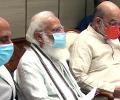
New ministry will bring much-needed transparency in the functioning of the cooperatives, which so far have been riddled with allegations of political interference and mismanagement.
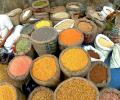
On a day when several mandis across the country are closed in protest against the recent Centre's decision to impose stringent stock-holding limit on pulses, the government clarified that limits have been defined as retail prices are still higher than last year though there is some moderation in the last few weeks. It said the same logic also holds true for edible oils, the import duties on which was slashed few days back and curbs lifted on import of refined oils. The decision on edible oil and pulses have caused massive resentment among the trading community as it came just ahead of the kharif sowing season, when prices were off their peaks due to multiple steps announced previously. Sources said trading activity in some of the major mandis dealing in pulses such as Sholapur, Amravati and Latur in Maharashtra, Indore and Dewas in Madhya Pradesh along with Kanpur in Uttar Pradesh was impacted as traders went on a flash strike in protest against the decision to impose stock limits.
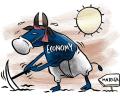
For the second month running, the demand for work under the flagship MGNREGA scheme has been lower than in 2020, which was an extraordinary year for the scheme. Latest data shows that around 35.1 million households have sought work under MGNREGA this June, or 21.48 per cent lower than the number that had sought work in the same month of 2020. This May, some 27.6 million households had sought work under the scheme, or 26.01 per cent lower than the same month last year.

'My ethnicity has been my biggest struggle in the industry, a setback in getting me work.'

With rainfall and monsoons becoming highly unpredictable partly due to climate change and partly due to usual changes in weather patterns, it is such innovations by IMD which will help in planning better, reports Sanjeeb Mukherjee.

According to the latest report from Stranded Workers Action Network (SWAN), a voluntary effort started in March 2020 to mobilise relief for stranded migrant workers, almost 92 per cent workers, whom the group contacted between April 21 and May 31, had not received any money from their employer. This was after restrictions were imposed and work had stopped. The survey, which was conducted among 1,396 worker groups, adding up to 8,023 people that included 4,836 women and children, showed that 76 per cent of the workers had less than Rs 200 left with them.

As India looks to mend its Covid-battered economy, one thing that will grab the attention of all concerned is the path that both wholesale and retail inflation will follow. Even the Reserve Bank of India in its latest policy statement said, "Going forward, the inflation trajectory is likely to be shaped by uncertainties impinging on the upside and the downside.

The cover provided under the Centre's Pradhan Mantri Suraksha Bima Yojana, which is a vital safety net for them, ended almost a year back on May 31, 2020. Ever since, there hasn't been much progress on the higher insurance coverage of Rs 5 lakh promised under the newly launched Pradhan Mantri Matsya Sampada Yojana, reports Sanjeeb Mukherjee.

As India looks to scale up use of technology in agriculture, a recent study has found that with just 2 per cent of the cultivators in India using mobile applications for farm-related activities and real-time alerts, adoption of tech solutions such as Internet of Things (IoT) remains at a nascent stage. It also found almost 90 per cent of the existing start-ups and tech-based companies have solutions that are focused only on pre-harvest operations and not on post-harvest which has a higher investment potential due to the presence of big companies. In post-harvest operations, the study, Titled, IoT Adoption in Indian agriculture, that was conducted by industry body Nasscom along with Cisco India among more than 180 enterprises and 40 agritech start-ups found that unclear Return on Investments (RoI) is a big stumbling block for adoption of tech solutions like IoT.

Surface temperatures have increased rapidly during the past century, leading to an increase in the frequency and intensity of tropical storms in the Arabian Sea, reports Sanjeeb Mukherjee.

The intensity of rainfall is likely to increase with the likelihood of very heavy falls at a few places and extremely heavy falls at isolated places on May 15, reports Sanjeeb Mukherjee.

They say that a stimulus package may not be necessary because, unlike last year's total lockdown, public transport, including the railways and airlines, is running and the restrictions on movement are localised and, in some cases, are partial rather than total.
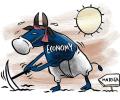
MGNREGA scheme: A significant Rs 17,370.58 crore has been carried forward over to the next financial year as unpaid dues as demand for work continued unabated for the scheme in rural areas.

'We are the only country in the world where everybody gets a digital vaccination certificate immediately... Then as we open up, as they did yesterday, which I think is a welcome move, you will have lots and lots of points where people will come in'

It was decided that the senior-most Army officer in a state would get in touch with the chief minister to understand the requirement and take forward the process, including offering to treat civilians wherever possible

The Hyderabad-based manufacturer uses a proprietary adjuvant Algel-IMDG, which has now proven to be a safe and effective adjuvant, especially to stimulate memory T cell responses.
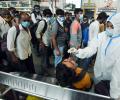
Maharashtra has reported the highest daily new cases at 58,924. It is followed by Uttar Pradesh with 28,211 while Delhi reported 23,686 new cases, the Union Health Ministry said on Tuesday.

With the farmers' protest against the three new laws and in support of legalising the minimum support price (MSP) going strong, state governments have announced a slew of measures in their annual Budgets to placate farmers. The Centre kicked things off in the Union Budget by assuring farmers that the MSP would continue and coming out with a report card to demonstrate its commitment. However, these efforts don't seem to have yielded tangible results. In their respective Budgets, states chose to go a step further by announcing a variety of measures.

While the Constitution makes everyone in India eligible to work anywhere in the country, states have used legal loopholes to frame laws.

Demoralising the private companies and disregarding their contribution won't do any good to the country or its youth as our experience has shown that private enterprises in mobile manufacturing has lead to every poor family owning a mobile phone now, while the country's private sector in the pharmaceutical space has been serving humanity through vaccines and medicines during Covid times, Modi said.
 © 2026 Rediff.com - Investor Information - Advertise with us - Disclaimer - Privacy Policy - Sitemap - Feedback - About us - Terms of use - Grievances